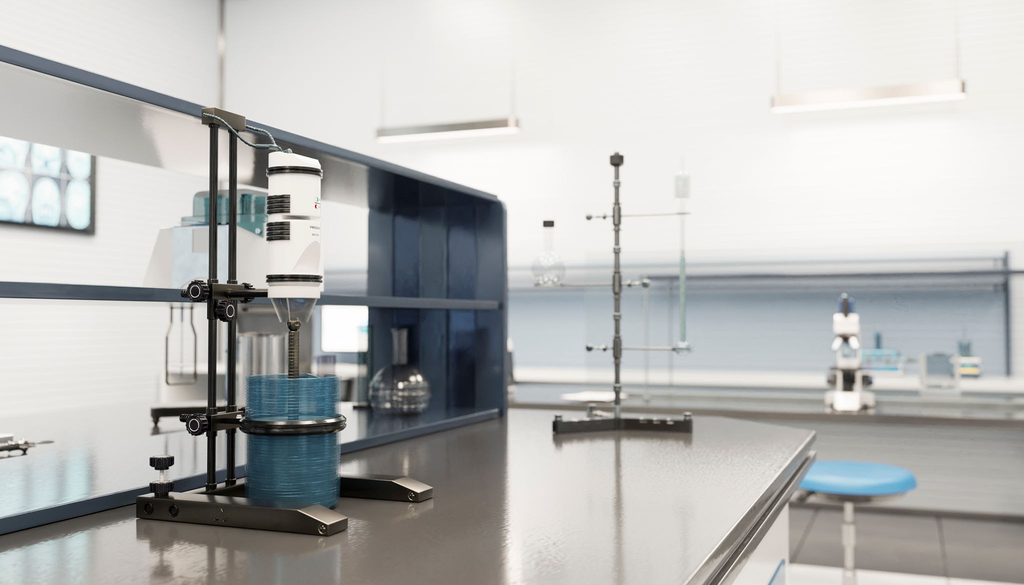
A laboratory is a controlled facility designed to carry out scientific research, experiments, measurement, and quality analysis under precisely regulated environmental conditions. Laboratories serve as the foundational infrastructure across biology, chemistry, physics, clinical medicine, engineering, and industrial development, providing the specialized equipment, safety protocols, and containment measures necessary to conduct testing and standard-setting work reliably.
LABORATORY
Standards for Establishing a Laboratory.
Setting up a functional scientific laboratory requires adherence to international regulatory standards, architectural guidelines, and safety engineering parameters to ensure operational integrity and workforce protection.
- Design and Ergonomic Layout: Workspaces must maintain clear separation between clean zone offices, wet lab execution areas, instrument rooms, and waste collection points. Countertops and casework require non-porous, chemical-resistant materials like epoxy resin, stainless steel, or high-pressure laminate to tolerate aggressive solvents and repeated disinfection.
- Ventilation and Environmental Control: Air handling systems must deliver defined air exchange rates (typically 6 to 12 air changes per hour) using single-pass, directional airflow that prevents cross-contamination. Biosafety hoods, laminar flow clean benches, and chemical fume hoods require dedicated ductwork and regular face-velocity validation to capture hazardous vapors and biological aerosols at the source.
- Safety Infrastructure and Emergency Features: Facilities mandate immediate access to plumbed eye-wash stations, safety showers, specialized fire suppression systems, and emergency power supply back-ups. Waste management pathways must strictly isolate biological waste, halogenated organic solvents, sharp objects, and radiochemical residues in accordance with environmental protection protocols.
- Quality Management Standards: Accreditation under standards like ISO/IEC 17225 (testing and calibration) or ISO 15189 (medical laboratories) dictates rigorous calibration schedules, standardized operating procedures (SOPs), chain-of-custody tracking, and regular proficiency testing.
Biosafety Levels of Laboratories.
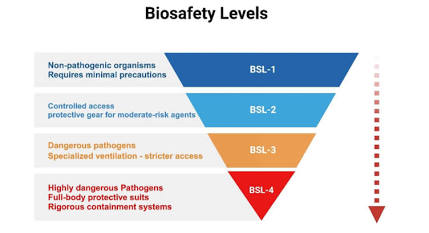
Laboratories handling biological agents are categorized into four distinct Biosafety Levels (BSL-1 through BSL-4) established by the CDC and WHO. Each progressive level introduces additional physical engineering controls, protective equipment, and operational restrictions tailored to the risk profile of the microbes being handled.
Biosafety Level 1 (BSL-1)
BSL-1 represents the baseline containment level suitable for working with well-characterized agents not known to consistently cause disease in immunocompetent adult humans (such as non-pathogenic E. coli or Saccharomyces cerevisiae). Containment relies on standard microbiological practices, open benchtop work, personal protective equipment (coats, gloves, eye protection), and basic handwashing facilities without specialized air filtration requirements.
Biosafety Level 2 (BSL-2)
BSL-2 builds upon BSL-1 standards to accommodate moderate-risk agents that pose potential hazards to personnel and the environment through ingestion, percutaneous injury, or mucous membrane exposure (e.g., Staphylococcus aureus, Hepatitis B, or Salmonella). Facilities require restricted access during operations, self-closing doors, dedicated biohazard signage, autoclaves for decontamination, and Class II Biosafety Cabinets for procedures that generate splashes or aerosols.
Biosafety Level 3 (BSL-3)
BSL-3 containment is mandatory for indigenous or exotic agents that pose serious or potentially lethal consequences through aerosol transmission (such as Mycobacterium tuberculosis, SARS-CoV-2, or Yellow Fever virus). Facilities feature controlled directional airflow (negative pressure), double-door airlock entryways, continuous HEPA filtration of exhaust air, and mandatory hands-free sink operations. Personnel undergo specialized training and perform all work within enclosed biosafety cabinets or specialized containment devices.
Biosafety Level 4 (BSL-4)
BSL-4 represents the highest level of biological containment, reserved for dangerous and exotic pathogens that pose a high individual and community risk of life-threatening disease with no available vaccines or treatments (e.g., Ebola, Marburg, or Smallpox viruses). Work is conducted either in positive-pressure suit laboratories where technicians wear full-body air-supplied suits or within sealed Class III Biosafety Cabinets (glove boxes). Facilities operate in isolated buildings or secure wings equipped with dedicated air supply, double-ended pass-through autoclaves, and extensive effluent decontamination systems.
0 Comments